Good eyesight makes a huge difference to your child’s day—from reading the board and completing homework to playing sports and enjoying screen time. However, children rarely complain about poor vision simply because they assume everyone sees the world the exact same way they do.
As a general rule for parents, subtle behaviors are often the first clue that a child needs a kids eye test. Keep an eye out for frequent squinting, headaches, rubbing their eyes, sitting unusually close to screens, losing their place while reading, or avoiding close-up tasks altogether. Because many visual changes develop gradually, scheduling a routine sight test—which is completely free on the NHS for children under 16—is the best way to catch changes early and ensure their eyes aren’t straining through the school term ahead.
How Do You Know If Your Child Needs an Sight Test?
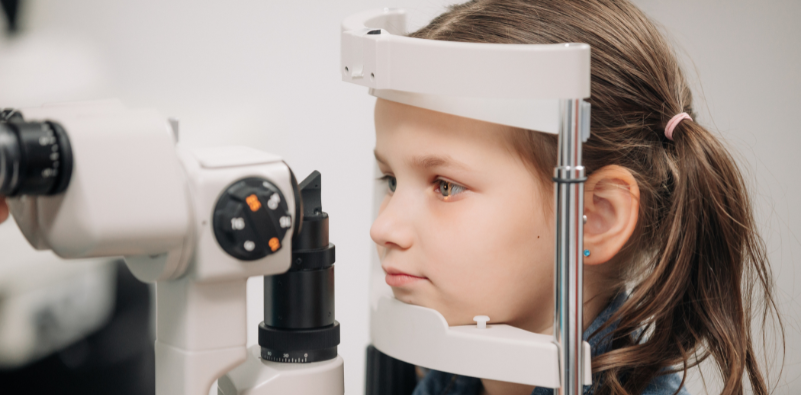
Changes in your child’s behavior, focus, or schoolwork often offer gentle clues about their eyesight. While these habits do not automatically mean there is a problem, noticing them regularly is a great reason to pop in for an eye examination.
Here are 7 common signs to keep on your radar:
1. Squinting to See Clearly
Have you caught your child screwing up their eyes when trying to read the board at school, watch TV, or spot a sign down the street? Frequent squinting temporarily changes the shape of the eye to bring distant objects into focus. This blurry distance vision is often a classic early sign of short sightedness (also known as myopia in children).
2. Sitting Too Close to Screens or the TV
If your child is constantly pulling their tablet right up to their face or moving closer to the television, it might not just be a bad habit. Moving closer makes images larger and easier to see, which often signals they are struggling with distance vision.
3. Frequent Headaches or Tired Eyes
Does your child complain of headaches or tired eyes after school, reading, or doing homework? When vision isn’t sharp, the eye muscles have to work double-time to keep things in focus. An eye examination can pinpoint whether eye strain is causing their discomfort.
4. Holding Books or Devices Very Close
Take a quick look at how your child holds a book or tablet. If they are bringing pages or screens noticeably close to their nose—especially if this is a new behavior—their eyes might be struggling to focus at a standard reading distance.
5. Losing Their Place While Reading
If your child frequently skips words, loses their line, or uses a finger to track every single word, it could indicate that their eyes aren’t tracking together properly. A routine sight test helps rule out underlying binocular vision issues.
6. Rubbing Their Eyes Frequently
Kids rub their eyes when they’re tired or dealing with allergies, but frequent eye rubbing during concentration is often a clear sign of eye fatigue. Mention this to your optometrist if it happens alongside other symptoms.
7. Avoiding Reading or Close-Up Tasks
When something takes too much effort, kids naturally avoid it. If a child who used to enjoy reading suddenly shies away from books, homework, or detailed drawing, uncorrected vision might be making the task feel frustrating or exhausting.
Can a Child Need an Eye Test Even If They Have No Symptoms?
Yes, absolutely. Many vision problems—including mild short sightedness—develop gradually, meaning children simply adapt without realizing anything is wrong. You don’t need to wait until your child mentions a problem before arranging an appointment.
While basic school vision screenings are helpful for catching obvious issues, they aren’t a substitute for a full child eye test with an optometrist. A full check covers overall eye health, eye movement, visual tracking, and whether your child could benefit from kids glasses.
Regular checks are also vital for monitoring myopia in children. If we do spot signs of short-sightedness early, Harrold Opticians offers dedicated myopia management options to help slow down its progression as your child grows.
Are Children’s Eye Tests Free on the NHS?
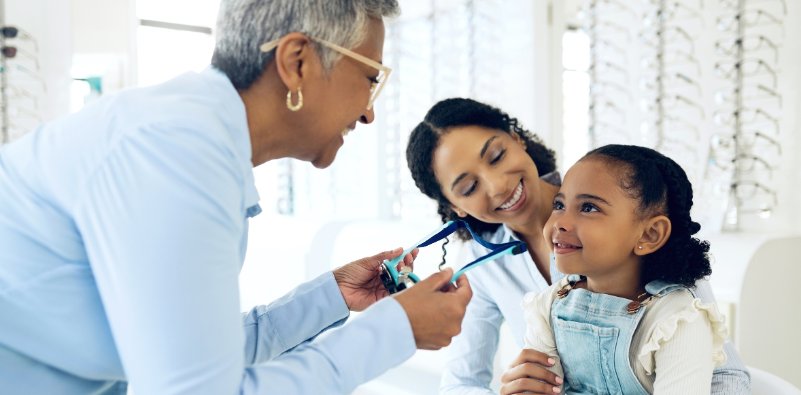
Yes! NHS sight tests are completely free for all children under 16 (and young adults under 19 in full-time education). If your child does need vision correction, you will also receive an NHS voucher towards the cost of their kids glasses.
Good to know: Your child doesn’t need to know their alphabet yet to have an eye check. Optometrists use shapes, pictures, and child-friendly light games to assess eyesight at any age.
Ready to Check Your Child’s Vision?
Whether you’ve noticed a few of these signs or simply want peace of mind before the new term starts, we’re here to help make the process simple, gentle, and stress-free. Book a kids eye test with Harrold Opticians today.